Showing posts with label Incantato Destinations. Show all posts

Wednesday, February 23, 2011

Incantato Destination: Monte Porzio Catone, Italy


Monte Porzio Catone is a municipality of the Province of Rome in the Italian Region of Latium and lies approximately twenty kilometers southeast of Rome in the Alban Hills. In addition to the Church of Saint Gregory the Great, erected in 1666 by Carlo Rainaldi for the Borghese family, ome of the town’s main attractions include the Astronomical Rome Observatory, the Museum of Wine, the City Museum, and the Iseo Alari Community School of Music.
The Astronomical Rome Observatory was built in 1939 and is located two kilometers from the city center. The structure rises from the remains of “Matilda’s Villa,” a first century Roman Villa. Originally built for the purpose of preserving the equipment of the National Observatory in Rome, the rationalist-style Astronomical Rome Observatory now promotes astronomic and scientific studies through educational initiatives and exchanges with schools and universities.
Opened in 2000, the Museum of Wine not only provides visitors with the highest quality wine tastings, but also takes guests through the process of creating wine. A tour of the museum teaches visitors, through the use of photos and demonstrations, the intricate steps of the wine production process. The museum even houses its own exclusive wine cellar.
The Monte Porzio City Museum is housed within a recently restored seventeenth century cathedral within the heart of the city. The museum illustrates the multi-thousand-year history of the city through such exhibitions as archeological findings, medieval papal pottery, and seventeenth century art.
The Iseo Ilari Community School of Music was founded by the Monte Porzio Catone City Administration in 1999. Through not only classes, but also performances and workshops, the school succeeds in encouraging social interaction and acceptance through the dissemination of music and cultural arts. The school, a recognized institution of the Italian Association of Schools of Music, currently offers studies in Classical Tradition and Music Performance.

For more information on Monte Porzio Catone, Italy, please visit: http://www.comune.monteporziocatone.rm.it/

Tuesday, February 22, 2011

Incantato Tours presents the Bellarmine University Music Department at Montecassino Abbey on Tuesday, March 8 at 11 AM


The Bellarmine University Music Department, of Louisville, Kentucky, will tour the Benedictine Abbey of Monte Cassino on Tuesday, March 8, 2011, where they will also perform a brief recital for the Abbey community at 11:00AM.

Monte Cassino is a rocky mountain approximately 80 miles southeast of Rome. Saint Benedict of Nursia established his first monastery here, the source and foundation of the Benedictine Order, in 529. The monastery stands as one of the few territorial abbeys remaining within the Catholic Church.
According the Gregory the Great’s biography of Saint Benedict, the monastery was constructed on an older pagan sight, a temple of Apollo that originally crowned the hill. The biography claims that Benedict’s first act was to smash the sculpture of Apollo and destroy the pagan altar. He then reused the temple, dedicating it to Saint Martin, and built a new chapel which he dedicated to Saint John the Baptist. Once established at Monte Cassino, Benedict never left. There he penned the Benedictine Rule which ultimately became the founding principle of western monasticism. Monte Cassino became the model for future Benedictine developments throughout the world.
Unfortunately the Abbey has fallen target to numerous military insurgencies throughout the years, including the infamous 1944 Battle of Monte Cassino. On February 15, 1944, the Abbey was almost completely destroyed by Allied air-raids after being mistakenly identified as a German stronghold. In fact, the Abbey was being used as a refuge for women and children attempting to shield themselves from the war. The Abbey was rebuilt after the war, financed by the Italian State, and was reconsecrated by Pope Paul VI in 1964.

Tuesday, May 18, 2010

Welcome to Italy!

Italy is located partly on the European Continent and partly on the Italian Peninsula in Southern Europe and on the two largest islands in the Mediterranean Sea, Sicily and Sardinia. Italy shares its northern, Alpine boundary with France, Switzerland, Austria and Slovenia. The independent states of San Marino and the Vatican City are enclaves within the Italian Peninsula, and Campione d'Italia is an Italian exclave in Switzerland. The territory of Italy covers 301,338 km² and is influenced by a temperate seasonal climate. With 60.2 million inhabitants, it is the sixth most populous country in Europe, and the twenty-third most populous in the world.
The land known as Italy today has been the cradle of European cultures and peoples, such as the Etruscans and the Romans. Italy's capital, Rome, was for centuries the political centre of Western civilisation, as the capital of the Roman Empire. After its decline, Italy would endure numerous invasions by foreign peoples, from Germanic tribes such as the Lombards and Ostrogoths, to the Normans and later, the Byzantines, among others. Centuries later, Italy would become the birthplace of the Renaissance, an immensely fruitful intellectual movement that would prove to be integral in shaping the subsequent course of European thought.
Through much of its post-Roman history, Italy was fragmented into numerous kingdoms and city-states (such as the Kingdom of Sardinia, the Kingdom of the Two Sicilies and the Duchy of Milan), but was unified in 1861, a tumultuous period in history known as the "Risorgimento". In the late 19th century, through World War I, and to World War II, Italy possessed a colonial empire, which extended its rule to Libya, Eritrea, Italian Somaliland, Ethiopia, Albania, Rhodes, the Dodecanese and a concession in Tianjin, China.
Modern Italy is a democratic republic and the world's eighteenth most developed country, with the eighth or tenth highest quality of life index rating in the world. It is a founding member of what is now the European Union and North Atlantic Treaty Organization. Italy is also a member of the G8 and G20. It is a member state of the Organisation for Economic Co-operation and Development, the World Trade Organization, the Council of Europe, and the Western European Union as well. The country's European political, social and economic influence make it a major regional power, alongside the United Kingdom, France, Germany, and Russia, and Italy has been classified in a study, measuring hard power, as being the eleventh greatest worldwide national power. The country has a high public education level, high labor force, is a globalised nation, and also has 2009's sixth best international reputation. Italy also has the world's nineteenth highest life expectancy, and the world's second best healthcare system. It is the world's fifth most visited country, with over 43.7 million international arrivals, and boasts a long tradition and several achievements in the arts, science and technology, including the world's highest number of UNESCO World Heritage Sites to date.

Your performance tour travel route through Italy

Monday, May 17, 2010

Visit Maiori


Maiori is a town and community on the Amalfi coast in the province of Salerno (Campania, Italy). It has been a popular tourist resort since Roman times, with the longest unbroken stretch of beach on the Amalfi coastline. The origins of the town are unclear but the original name of the town was Reghinna Maior, in contrast to the neighbouring town, Minori, Reghinna Minor. All places along the coast were formed by alternating conquerors - such as the Etruscans or the Romans. Between 830 and 840, the places of the coast united to form a confederation of Amalfi States. In this Amalfi Sea Republic, the places between Lettere and Tramonti and between Cetara and Positano, along with the island of Capri, were united; and their inhabitants were all called Amalfitaner. At that time, each city retained its own name and administrative autonomy, but had a specific role in this federation. Later it became part of the Principality of Salerno, and then of the Kingdom of Naples, of which it followed the history until the 19th century.

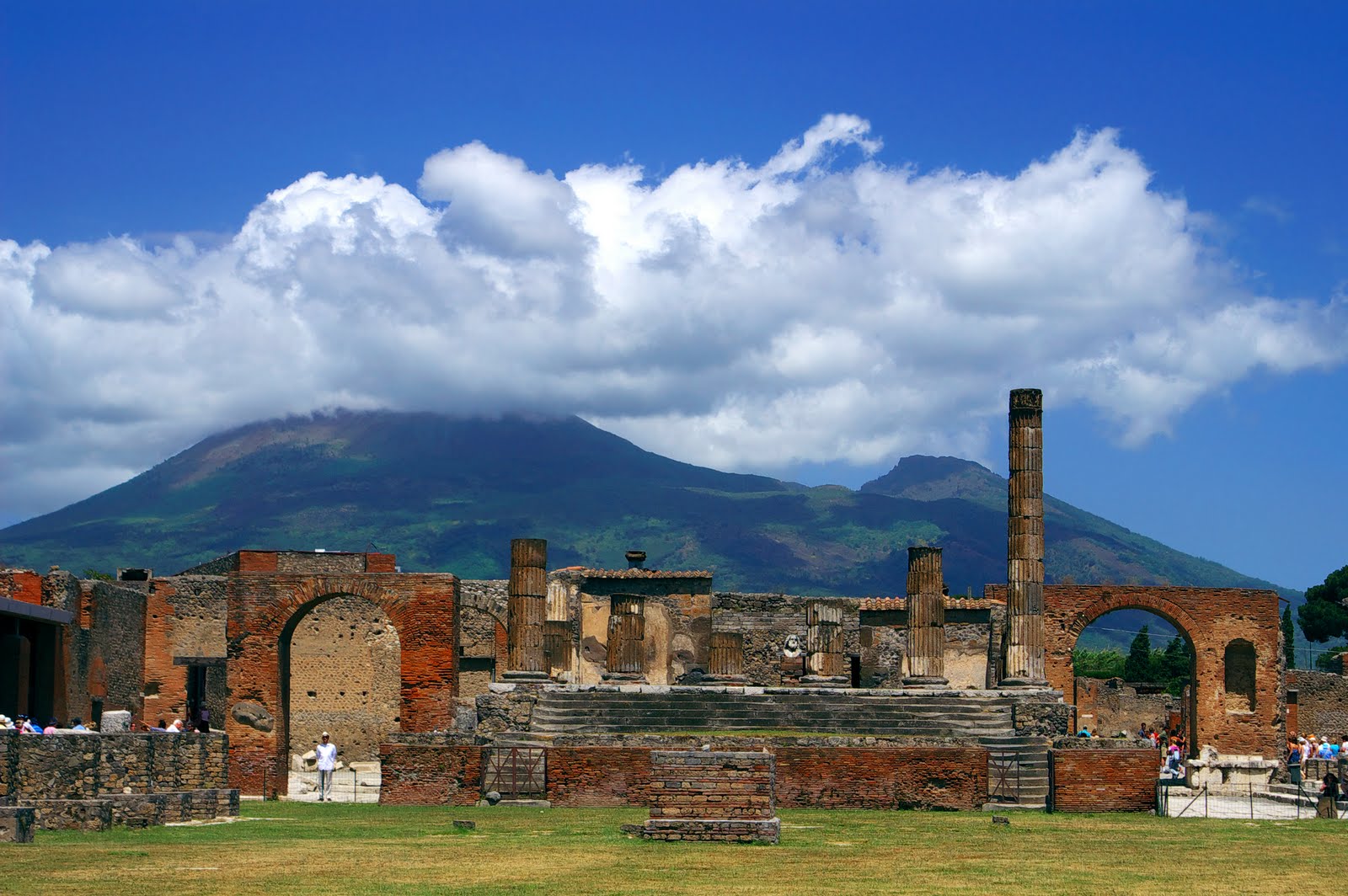
Sightseeing-Highlight: Pompeii

Pompeii is a ruined and partially buried Roman town-city near modern Naples in the Italian region of Campania, in the territory of the commune of Pompeii. Along with Herculaneum, its sister city, Pompeii was destroyed and completely buried during a long catastrophic eruption of the volcano Mount Vesuvius spanning two days in 79 AD. The volcano collapsed higher roof-lines and buried Pompeii under 20 m (66 ft) of ash and pumice, and it was lost for nearly 1,600 years before its accidental rediscovery in 1592. Since then, its excavation has provided an extraordinarily detailed insight into the life of a city at the height of the Roman Empire. Today, this UNESCO World Heritage Site is one of the most popular tourist attractions of Italy, with approximately 2,500,000 visitors every year.


About Capri


Capri is an Italian island in the Tyrrhenian Sea off the Sorrentine Peninsula, on the south side of the Gulf of Naples, in the Campania region of southern Italy. It has been a resort since the time of the Roman Republic. In the latter half of the 19th century, Capri became a popular resort for European artists, writers and other celebrities. John Singer Sargent and Frank Hyde are among the prominent artists who stayed on the island around the late 1870s. Sargent is best known for his series of portraits featuring the beautiful local model, Rosina Ferrara. Also in the 19th century, the natural scientist Ignazio Cerio catalogued the flora and fauna of the island. This work was continued by his son, the author and engineer Edwin Cerio, who wrote several books on life in Capri in the 20th century.

The picture is from the official homepage of the Capri tourism office.

Explore Tuscany with Incantato Tours

Tuscany is a region in Central Italy. It has an area of 22,990 square kilometres (8,880 sq mi) and a population of about 3.6 million inhabitants. The regional capital is Florence.
Tuscany is known for its beautiful landscapes, its rich artistic legacy and vast influence on high culture. Tuscany is widely regarded as the true birthplace of the Italian Renaissance, and has been home to some of the most influential people in history, such as Petrarch, Dante, Botticelli, Michelangelo, Leonardo da Vinci, Galileo Galilei, Amerigo Vespucci and Puccini. Due to this, the region has several museums, most of which (such as the Uffizi and the Pitti Palace) are found in Florence, but others in towns and smaller villages. Tuscany has a unique culinary tradition, and is famous for its wines (most famous of which are Chianti, Vino Nobile di Montepulciano, Morellino di Scansano and Brunello di Montalcino). Six Tuscan localities have been designated World Heritage Sites: the historical center of Florence (1982), the historical center of Siena (1995), the square of the Cathedral of Pisa (1987), the historical center of San Gimignano (1990), the historical center of Pienza (1996) and the Val d'Orcia (2004). Furthermore, Tuscany has over 120 protected nature reserves. This makes Tuscany and its capital city Florence very popular tourist destinations, attracting millions of tourists every year. Florence itself receives an average of 10 million tourists a year by placing the city as one of the most visited in the world.

Visit Florence

  • Florence is the most populous city in Tuscany, with 367,569 inhabitants.
  • A centre of medieval European trade and finance and one of the richest and wealthiest cities of the time, Florence is often considered the birthplace of the Italian Renaissance; in fact, it has been called the Athens of the Middle Ages.
  • The historic centre of Florence attracts millions of tourists each year and was declared a World Heritage Site by UNESCO in 1982.
  • It has been the birthplace or chosen home of many notable historical figures, such as Dante, Botticelli, Michelangelo, Galileo Galilei, Roberto Cavalli and Emilio Pucci.
  • Florence being historically the first home of Italian fashion is also home to the legendary Italian fashion establishment Salvatore Ferragamo, notable as one of the oldest and most famous Italian fashion houses.
  • Florence has been a setting for numerous works of fiction and movies, including the novels and associated films, such as "Hannibal", "A Room with a View", "Tea with Mussolini" and "Virgin Territory".
  • The city is one of the great wine-growing regions in the world. The Chianti region is just south of the city, and its Sangiovese grapes figure prominently not only in its Chianti Classico wines but also in many of the more recently developed Supertuscan blends.

Sunday, May 16, 2010

Visit Montepulciano: birthplace of Saint Bellarmine


Montepulciano is a medieval and Renaissance hill town and commune in the province of Siena in southern Tuscany, Italy, just 77 miles southeast of Florence and 115 miles north of Rome.  
After the fall of the Western Roman Empire, Montepulciano developed as a religious center under the Lombards. Robert Bellarmine was born here on October 4, 1542 to Vincenzo Bellarmino and his wife Cizia Cervini, the sister of Pope Marcellus II. Robert Bellarmine went on to become a Roman Catholic Cardinal and one of thirty-three Doctors of the Roman Catholic Church. He was active in the movements of the Counter-Reformation and was ultimately canonized by Pope Pius XI in 1930.
Today, Montepulciano is recognized as a major producer of food and drink. The town is known internationally for its top-quality wine. Wine connoisseurs consider its Vino Nobile among Italy’s best. Montepulciano is also known for its pork products, cheese, pici pasta, lentils, and honey.

City facts about Siena

Siena is a city in Tuscany, Italy. It is the capital of the province of Siena. The historic centre of Siena has been declared by UNESCO a World Heritage Site. It is one of the nation's most visited tourist attractions, with over 169,000 international arrivals in 2008. Siena is famous for its cuisine, art, museums, medieval cityscape and palio.
Siena, like other Tuscan hill towns, was first settled in the time of the Etruscans (c. 900 BC to 400 BC) when it was inhabited by a tribe called the Saina. The Etruscans were an advanced people who changed the face of central Italy through their use of irrigation to reclaim previously unfarmable land, and their custom of building their settlements in well-defended hill-forts. A Roman town called Saena Julia was founded at the site in the time of the Emperor Augustus. The first document mentioning it dates from AD 70. Some archaeologists assert it was controlled for a period by a Gaulish tribe called the Saenones.
Siena's cathedral, the Duomo, begun in the twelfth century, is one of the great examples of Italian romanesque architecture. Its main façade was completed in 1380. It is unusual for a Christian cathedral in that its axis runs north-south. This is because it was originally intended to be the largest cathedral in existence, with a north-south transept and an east-west aisle, as is usual. After the completion of the transept and the building of the east wall (which still exists and may be climbed by the public via an internal staircase) the money ran out and the rest of the cathedral was abandoned.
Over the centuries, Siena has had a rich tradition of arts and artists. The list of artists from the Sienese School include Duccio, and his student Simone Martini, Pietro Lorenzetti and Martino di Bartolomeo. A number of well known works of Renaissance and High Renaissance art still remain in Siena galleries or decorate churches in Siena.

Saturday, May 15, 2010

City Facts about Rome

  • Rome's early history is shrouded in legend. According to Roman tradition, the city was founded by the twins Romulus and Remus on 21 April 753 BC.
  • Due to this centrality on many levels, the city has been nicknamed "Caput Mundi" (Latin for "Capital of the World") and "The Eternal City".
  • Its rich artistic heritage and vast amount of ancient, notably architectural and archaeological sites, contribute to the city's UNESCO World Heritage Sites.
  • Rome is the third-most-visited tourist destination in the European Union.
  • The city is also an important worldwide hub of the cinematic and filming industry, home to the important and large Cinecittà Studios, which saw the filming of several internationally acclaimed movies as well as television programmes.
  • The Rome metropolitan area has a GDP of €109.4 billion (US$ 149.14), and according to a 2008 study, the city is the world's 35th richest city by purchasing power.
  • The city hosted the 1960 Olympic Games and is also an official candidate for the 2020 Olympic Games.
  • Rome is an important centre for music, and it has an intense musical scene, including several prestigious music conservatories and theatres. It hosts the Accademia Nazionale di Santa Cecilia (founded in 1585), for which new concert halls have been built in the new Parco della Musica, one of the largest musical venues in the world.
  • A Jewish influence in the Italian dishes can be seen, as Jews have lived in Rome since the 1st century BCE. Examples of these include "Saltimbocca alla Romana" - a veal cutlet, Roman-style; topped with raw ham and sage and simmered with white wine and butter - and "Carciofi alla giudia" - artichokes fried in olive oil, typical of Roman Jewish cooking.

Facts about Vatican City


Vatican City, officially the State of the Vatican City, is a landlocked sovereign city-state whose territory consists of a walled enclave within the city of Rome, the capital city of Italy. It has an area of approximately 44 hectares, and a population of just over 800.
Vatican City is a city-state that came into existence in 1929. It is distinct from the Holy See, which dates back to early Christianity and is the main Episcopal see of 1.147 billion Latin and Eastern Catholic adherents around the globe. Ordinances of Vatican City are published in Italian; official documents of the Holy See are issued mainly in Latin. The two entities even have distinct passports: the Holy See, not being a country, only issues diplomatic and service passports; the state of Vatican City issues normal passports. In both cases the passports issued are very few.
Vatican City is an ecclesiastical or sacerdotal-monarchical state, ruled by the bishop of Rome - the Pope. The highest state functionaries are all Catholic clergymen of various nationalities. It is the sovereign territory of the Holy See (Sancta Sedes) and the location of the Pope's residence, referred to as the Apostolic Palace. The Popes have resided in the area that in 1929 became Vatican City since the return from Avignon in 1377.

Tour the Vatican Museums and the Sistine Chapel

 
The Vatican Museums are indisputably one of the finest collections of art in the world. Over the centuries, Papal patrons have commissioned renowned works such as the magnificent frescoes of Michelangelo in the Sistine Chapel, and those by Raphael in his stanze. The museums also host some of the most important sculptures from the ancient world, such as the Laocoon and the Apollo Belvedere. Incantato Tours is thrilled to offer the Providence College Choir and friends the opportunity to see these works as they were originally viewed and contemplated by the Popes who created the Museums.
Incantato's visit to the Vatican Museums & Sistine Chapel will be led by a specialized docent/expert
guide and is just open to members of your tour. We also provide headsets to everyone for a truly individual experience. This is an exceptional opportunity for an intimate visit and lecture on the Vatican and its impressive art collection without the press and chaos of the crowds. 
Please note that not all galleries will be accessible to us during this after hours visit. The Pinacoteca and Egyptian collections are not available for viewing after closing hours. The opportunity to view the Belvedere Courtyard is also dependent on the route the Vatican guards allow us to take. We normally spend a significant amount of time (35-40 minutes) inside the Sistine Chapel and divide the rest of our time between the Gallery of Maps, Tapestry Gallery, and Raphael Rooms, including other collections as time and security permits.

Saturday, April 17, 2010

Incantato Tour Sight: Roman Forum in Rome

The Roman Forum in Rome is a small open rectangle surrounded by the ruins of ancient government buildings at the center of the city of Rome. Citizens of the ancient city referred to this marketplace as the Forum Magnum, or simply the Forum. It was for centuries the center of Roman public life: the site of triumphal processions and elections, venue for public speeches and gladiatorial matches, and nucleus of commercial affairs. Here statues and monuments commemorated the city's great men. The teeming heart of ancient Rome, it has been called the most celebrated meeting place in the world, and in all history.
Located in the small valley between the Palatine and Capitoline Hills, the Forum today is a sprawling ruin of architectural fragments and intermittent archeological excavations attracting numerous sightseers. Many of the oldest and most important structures of the ancient city were located on or near the Forum. The Kingdom's earliest shrines and temples were located on the southeastern edge. These included the ancient former royal residence, the Regia (8th century BC), and the Temple of Vesta (7th century BC), as well as the surrounding complex of the Vestal Virgins, all of which were rebuilt after the rise of imperial Rome.